Insights
Writing on citation integrity and AI evidence.
Long-form pillar guides with supporting articles on how AI systems decide what to rely on and cite.
New to the terminology? Read the Citation Integrity™ Glossary.
By CiteAbility™ · Last updated
Key takeaways.
- Insights is organised as pillar guides, each with supporting articles on one part of the topic.
- Every article states its sources and evidence so its claims can be checked.
- Articles explain how AI systems select, verify and attribute sources — not how to manipulate them.
- The Glossary defines the terminology used across the library.
- CiteAbility™ cannot guarantee citation, recommendation, ranking or inclusion by any external AI system.
Global AI Governance
AI Regulation
Learn how emerging global rules govern artificial intelligence systems and citations. This plain-English guide explains legal accountability, copyright standards, and steps organizations can take to remain visible and compliant across automated discovery platforms.

What are the new global laws for AI systems?
Discover how emerging global regulations govern artificial intelligence systems, training data transparency, and source attribution. This guide explores major jurisdictional frameworks, legal accountability, and compliance requirements for publishers and developers.
Mark BarclayUpdated

How can businesses prepare for future AI regulations?
Explore the regulatory landscape governing enterprise artificial intelligence adoption, source transparency, and data provenance. This guide details practical compliance steps, documentation requirements, and governance structures to keep your business resilient as legal standards evolve.
Mark BarclayUpdated
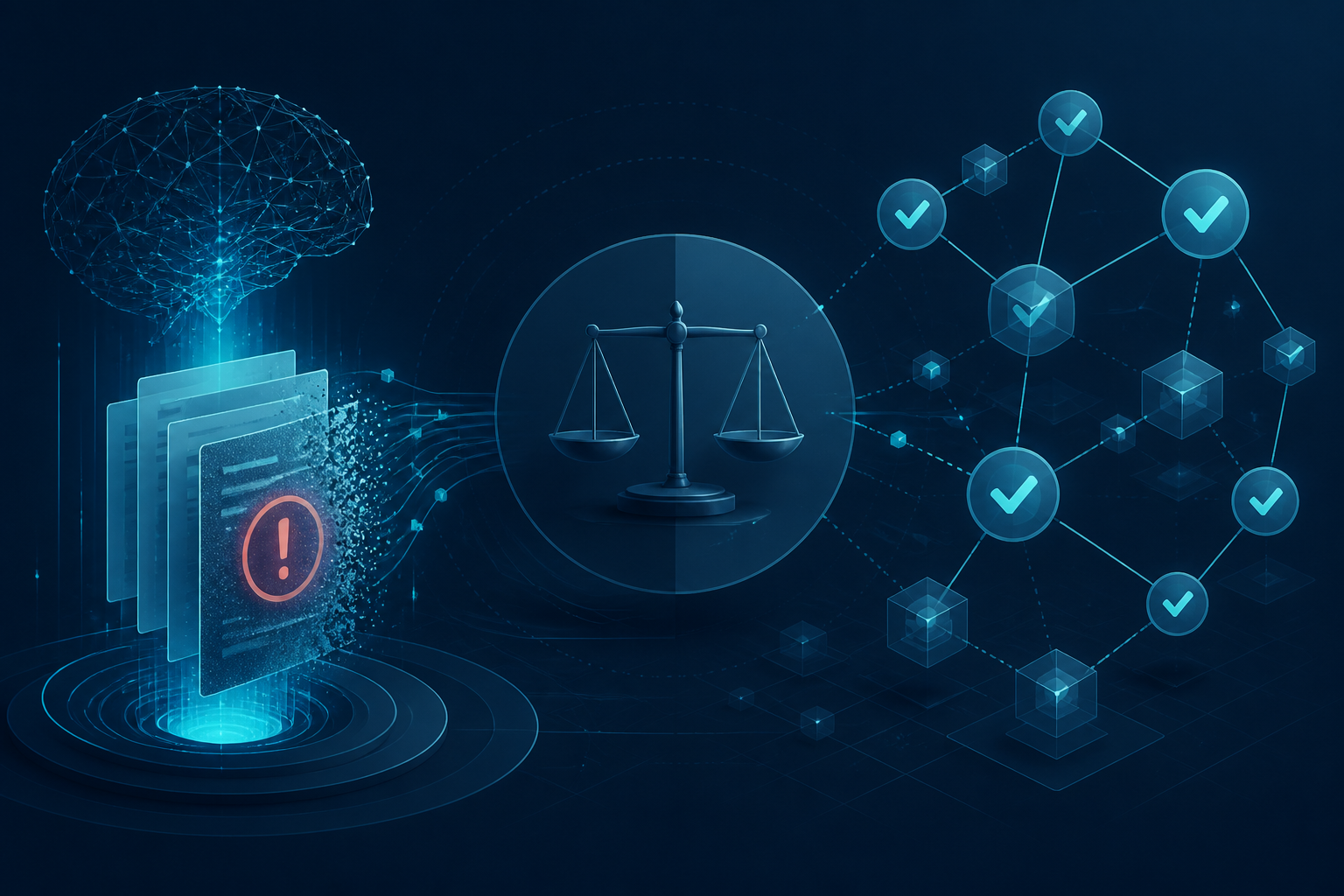
Who is responsible when an AI tool shares false claims?
Explore how legal frameworks, regulatory statutes, and enterprise policies allocate liability across developers, deployers, and source publishers when artificial intelligence generates inaccurate claims, defamatory statements, or misleading citations.
Mark BarclayUpdated

What is the European AI Act?
Readers will discover how the European Union categorizes artificial intelligence systems by risk, the legal transparency and governance obligations placed on developers and deployers, and the operational steps required to maintain compliance across digital information workflows.
Mark BarclayUpdated

How do authorities track where AI finds its facts?
Discover how regulatory authorities audit AI training data, inspect retrieval-augmented generation pipelines, and enforce provenance requirements to trace the origins of factual claims generated by artificial intelligence systems.
Mark BarclayUpdated

What makes content dependable enough for AI to cite?
Discover how artificial intelligence retrieval engines evaluate digital material for factual grounding. This guide examines the structural, legal, and evidential criteria that determine whether an automated system can rely on your documentation for citations.
Mark BarclayUpdated
Category definition
Citation Integrity: The Complete Guide to Dependable Evidence for AI
What Citation Integrity means, how it differs from SEO authority and AI visibility, and how dependable evidence can be assessed without claiming to measure truth.

The Eight Dimensions of Dependable AI Evidence
Learn how the eight dimensions of dependable AI evidence evaluate sources, entities, probity, citations, first-hand experience, content quality, technical accessibility, and integrity analysis to help AI systems select reliable references.
Mark BarclayUpdated

What Is Citation Integrity, and Why Isn't It the Same as SEO Authority
Learn the distinct differences between traditional SEO authority metrics and citation integrity. This guide examines how AI models select evidence, why backlink popularity fails as an accuracy proxy, and what makes information dependable for generative systems.
Mark BarclayUpdated

What Is Citation Integrity?
Citation Integrity is the degree to which published information can be relied upon and correctly attributed when an AI system answers a question. This is the definition, its scope, and where it ends.
Mark BarclayUpdated
The problem space
AI Citation Failures: How Evidence Breaks Down in AI-Generated Answers
How citations in AI answers fail in practice: mismatched sources, circular sourcing, outdated evidence, misattribution and conflicting sources.
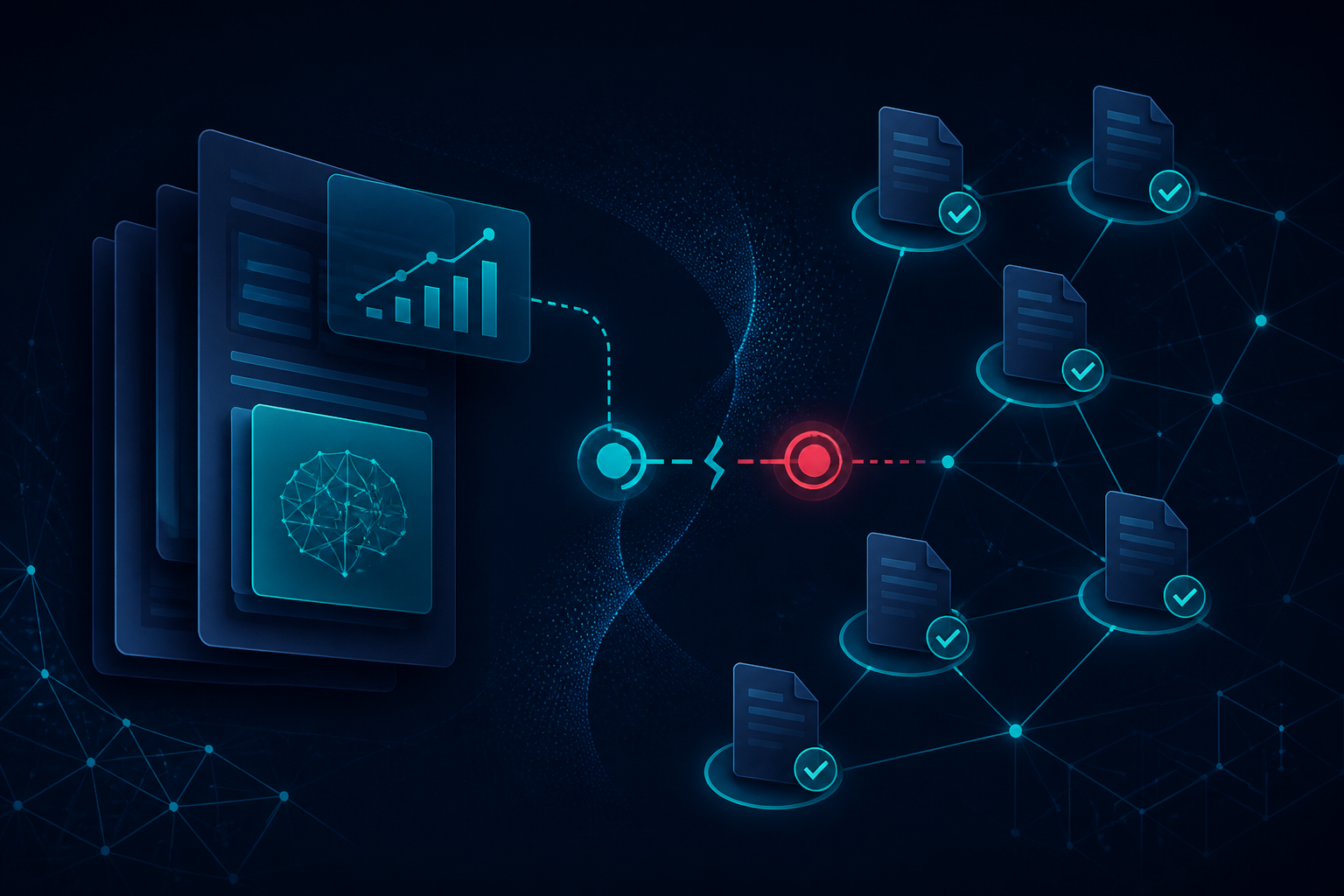
What Is a Citation-to-Claim Mismatch?
Learn how citation-to-claim mismatches occur in generative AI systems, why retrieval architectures produce unsupported attributions, and how organizations evaluate evidence alignment to ensure outputs remain dependable.
Mark BarclayUpdated

Circular Sourcing: How One Unsupported Claim Becomes Common Knowledge
Learn how circular sourcing creates artificial consensus online, how retrieval-augmented AI systems amplify single unsupported claims, and what evidence verification practices detect closed citation loops before errors spread.
Mark BarclayUpdated

Why AI Chatbots Cite Sources That Do Not Support Their Claims
Learn why AI chatbots link to irrelevant or conflicting sources, how retrieval-augmented generation breaks down, and what technical steps organisations can take to evaluate citation fidelity.
Mark BarclayUpdated
For publishers and brands
How to Make Your Website a More Dependable Source for AI
Practical guidance for publishers, brands and enterprises on making information easier for AI systems to discover, parse, verify and rely upon.

How to Fix Information That AI May Struggle to Rely Upon
A practical guide to identifying and repairing ambiguous claims, disconnected evidence, and structural defects that cause AI models and retrieval systems to discard or misattribute online information.
Mark BarclayUpdated

Do XML Sitemaps, Schema and llms.txt Help AI Understand Your Website?
This guide explains the technical roles of XML sitemaps, Schema.org markup, and llms.txt files, exploring how machine-readable structures assist automated crawlers in discovering, parsing, and disambiguating web content for language model retrieval systems.
Mark BarclayUpdated

Robots.txt, AI Crawlers and Whether AI Can Access Your Website
This guide explains how robots.txt controls AI crawlers, details the operational differences between model training bots and live retrieval agents, and provides practical configurations for managing AI access to your web content.
Mark BarclayUpdated
Observed AI behaviour
AI Outcomes: How AI Systems Mention, Cite and Recommend Businesses
Citation Integrity assesses the underlying conditions for dependable evidence. AI Outcomes observes what AI systems actually mention, cite and recommend - the two are measured separately and neither guarantees the other.

How Do AI Systems Decide Which Companies to Mention?
Learn how large language models and retrieval-augmented generation pipelines select, filter, and mention specific commercial entities. This guide examines the technical mechanics of entity retrieval, training corpus representation, context grounding, and probabilistic generation.
Mark BarclayUpdated

AI Visibility vs Citation Integrity: What Is the Difference?
This guide examines the core distinctions between surface AI visibility and underlying citation integrity, explaining why being mentioned by a model is fundamentally different from providing dependable evidence.
Mark BarclayUpdated
What Are AI Outcomes?
Learn what AI outcomes are, how AI models mention, cite, and recommend entities, why outcomes differ from underlying citation integrity, and how organizations measure retrieval visibility.
Mark BarclayUpdated
For AI, RAG and governance teams
Dependable AI: Evidence, Retrieval, Governance and Citation Integrity
Retrieval, evidence verification, benchmarking, audit trails and governance for teams building or buying AI systems that must show why a source was cited.

How AI Systems Should Handle Conflicting Evidence
Discover how retrieval-augmented AI systems detect, classify, and resolve contradictory source data. This guide covers temporal drift, methodological disagreements, epistemic calibration, and transparent citation logging for governance teams.
Mark BarclayUpdated

Why Certified Should Not Mean Guaranteed True
Learn why evidence certification verifies rigorous research processes, structural integrity, and verifiable sourcing rather than absolute truth, and how enterprise AI governance teams use process verification to evaluate dependable retrieval candidates.
Mark BarclayUpdated

Why AI Governance Needs Source and Citation Provenance
Learn how source and citation provenance transforms AI governance from abstract policy into verifiable accountability, helping enterprise teams audit retrieval pipelines, satisfy regulatory standards, and trace machine-generated claims to origin materials.
Mark BarclayUpdated

Evidence Thresholds for Enterprise AI
Readers will discover how enterprise AI teams configure tiered evidence thresholds, evaluate source dependability across operational risk levels, and implement retrieval gating to prevent unsupported assertions in automated business workflows.
Mark BarclayUpdated
What an AI Evidence Audit Trail Should Contain
Learn the core architectural components of an AI evidence audit trail, from raw source snapshots and retrieval timestamps to span-level citation mapping and governance logging for enterprise systems.
Mark BarclayUpdated

How to Benchmark Citation Quality Across AI Models
Benchmarking citation quality across AI models requires structured evaluation of attribution accuracy, evidence grounding, and source dependability. Learn the core metrics, test dataset design, and evaluation steps for dependable AI governance.
Mark BarclayUpdated
FAQ
Frequently asked questions
The questions organisations ask us most often.
- How often is Insights updated?
- New articles and guide updates are published regularly, and each page shows its own last-updated date so you can judge freshness.
- Who writes these articles?
- They are written and reviewed by the CiteAbility™ team, with a named author or the editorial team shown on each article.
- Can I republish or cite an article?
- Yes, with attribution and a link to the original page. Please cite the article title and its last-updated date.