Global AI Governance
AI Regulation
Short answer.
AI regulation refers to the emerging framework of laws and standards that govern how artificial intelligence systems gather data, generate answers, and attribute their sources. These rules require automated tools to show where they find their information and ensure their outputs rely on verifiable evidence. For publishers and businesses, understanding these legal shifts is essential to maintaining digital visibility and minimizing legal liability.
Mark Barclay · Updated 9/16/2026
Share this article
X and WhatsApp open with the caption already written. LinkedIn and Facebook only accept a link — they build the preview from this page, so copy the caption and paste it into the post.
Key takeaways.
- Global laws increasingly require AI platforms to document and credit the sources behind their generated answers.
- Transparency standards help users verify automated claims and hold AI developers accountable for errors.
- High-risk industries like healthcare and finance face much stricter citation and audit requirements.
- Publishing clear authorship, primary data, and verifiable facts makes content easier for AI models to safely reference.
- Adapting early to governance frameworks protects businesses against intellectual property and liability disputes.
Why are governments introducing rules for artificial intelligence?
Lawmakers around the world are responding to the rapid spread of automated systems. In the past, software performed basic tasks based on fixed instructions. Today, generative artificial intelligence—tools that create new text, images, or code from patterns in training data—can summarize vast libraries of information in seconds. While these tools offer real efficiency, they also present serious challenges.
One major concern is accuracy. Automated tools can present incorrect information with great confidence. When people make medical, legal, or financial decisions based on unverified summaries, real harm can occur. Governments want safeguards that prevent automated tools from spreading unverified claims.
Another core concern is intellectual property. Generative models read millions of articles, books, and reports without always asking permission or naming the original creator. Lawmakers want to protect the people and businesses who produce original work.
Finally, market fairness matters. If a few large software platforms control how information is filtered and presented, smaller publishers could lose their audience. Legal frameworks aim to keep the digital economy open, competitive, and accountable.
How do new regulations require source transparency from AI tools?
Source transparency means showing exactly where an automated system found its facts. Early artificial intelligence models operated like closed systems. A user typed a prompt, and the machine returned an answer without explaining how it reached that conclusion or which websites it referenced.
New regulatory proposals directly challenge this closed model. Regulators increasingly demand clear attribution. Under emerging rules, developers of general-purpose systems must maintain records of their training data and provide mechanisms to credit primary sources.
Why source attribution matters
- Auditability: Independent inspectors and users can check whether an automated summary matches the underlying facts.
- Accountability: When an answer causes financial or physical harm, attribution clarifies whether the error came from the source material or the AI model itself.
- Fair compensation: Tracking source usage creates a foundation for commercial agreements between technology companies and content creators.
When an automated tool credits a publisher, it gives readers a clear path to verify the details. This transparency helps readers decide whether an answer is solid enough to rely on for important decisions.
What role does copyright play in automated content selection?
Copyright laws protect original creative works, such as written articles, research papers, and artistic images. The relationship between copyright law and machine learning is one of the most disputed areas in modern legal policy.
Many technology companies argue that reading public web pages to train models falls under fair use or text-and-data mining exceptions. However, content owners argue that using their work to generate competing summaries without permission violates their rights.
Emerging copyright standards
Courts and legislative bodies are establishing clearer boundaries:
- Opt-out mechanisms: Technical protocols that allow publishers to tell automated crawlers not to scrape their content for training.
- Licensing frameworks: Commercial agreements where technology platforms pay publishers for access to high-quality reference archives.
- Citation obligations: Rules requiring systems to provide visible attribution and links whenever an answer relies heavily on a specific publication.
Publishers who maintain clear copyright statements and structured metadata make it easier for automated crawlers to recognize their ownership. This clarity helps AI platforms cite the original work legally and dependably.
How do global AI frameworks compare across key regions?
Different regions are approaching technology governance with distinct priorities and legal traditions. Some focus on comprehensive legislation, while others rely on agency guidelines or voluntary standards.
| Region | Primary Regulatory Approach | Core Requirements for AI Systems | Citation & Transparency Focus |
|---|---|---|---|
| European Union | Comprehensive risk-based law | Strict documentation, risk audits, and public registers for high-risk models | Mandatory summary of copyrighted training data and clear labeling of generated text |
| United States | Sector-specific rules and agency guidance | Safety testing, fraud prevention, and industry-level accountability | Emphasis on fair competition, IP protection, and verifying source authenticity |
| United Kingdom | Principles-based regulator model | Safety, fairness, and contestability enforced by existing sectoral regulators | Focus on accountability and clear explanations of automated decisions |
| Asia-Pacific (Key Markets) | Hybrid legislative and developmental frameworks | Security evaluations, data sovereignty, and ethical development guidelines | Clear watermarking of synthetic content and attribution of authoritative public records |
This comparison shows that while governance structures vary by jurisdiction, every major market is moving toward greater accountability. Organizations operating internationally must prepare for strict documentation standards. Demonstrating the dependability of underlying data is becoming a universal requirement across all global borders.
Why do high-risk sectors face tighter citation standards?
Not all artificial intelligence applications carry the same level of risk. An automated system recommending a recipe poses little threat if it makes a mistake. In contrast, an automated system assisting a doctor, processing loan applications, or evaluating insurance claims can change lives in profound ways.
Regulators categorize these sensitive areas as high-risk domains. Because errors in these sectors can cause severe harm, lawmakers apply much stricter citation and evidence standards.
Critical requirements in sensitive domains
- Verifiable citations: Automated outputs must link directly to peer-reviewed research, official regulatory databases, or certified industry standards.
- Human oversight: Qualified human professionals must be able to review the cited sources before acting on automated recommendations.
- Explainability: The system must show the exact chain of reasoning and the specific documents used to support its conclusions.
In fields like medicine, law, and corporate finance, an AI system cannot simply guess. It must cite authoritative, stable sources. Organizations producing authoritative content in these sectors will find their materials in higher demand as automated tools seek verified records to fulfill compliance requirements.
Who holds legal responsibility when an AI generates false claims?
When an automated tool outputs incorrect, harmful, or defamatory statements, determining liability is complex. Does the fault lie with the user who entered the prompt, the software company that developed the model, or the website where the training data originated?
Regulators and courts are working to clarify these boundaries. Historically, internet platforms enjoyed broad protections from liability for third-party content. However, generative systems do not merely host text; they synthesize and generate new material.
Clarifying lines of accountability
Current legal trends point toward shared responsibility across the supply chain:
- System developers: Developers face legal exposure if they fail to implement safety filters, allow their tools to fabricate sources, or train their systems on unlawful material.
- Deploying organizations: Businesses that integrate automated tools into customer-facing roles are responsible for verifying that their tools provide accurate advice.
- Source publishers: Publishers who provide clean, verified data with clear authorship are protected when their original work is accurate, even if an AI system misinterprets it.
Because legal liability is expanding, developers are incentivized to design systems that cite reputable sources. Accurate citations allow companies to prove that their systems relied on solid evidence rather than ungrounded assumptions.
How will regulatory compliance change search and website discovery?
For decades, search engine optimization focused on keywords, backlinks, and page speed. Websites competed to rank at the top of a list of blue links. The rise of AI-driven search and conversational answer engines changes this dynamic entirely.
Under new regulatory mandates, AI search engines cannot simply display synthetic answers without attribution. They are increasingly required to provide clear citations and source links within the text.
The shift to citation-based discovery
To earn citations in regulated discovery environments, content must meet higher standards of integrity:
- Clear authorship: Articles must clearly state who wrote the material and highlight their relevant qualifications.
- Original data: Systems prefer citing primary research, case studies, and empirical datasets over generic summaries.
- Structured references: Content that explicitly cites its own sources makes it easier for automated tools to verify facts.
Websites that publish vague, unreferenced marketing copy will likely become invisible in AI-generated answers. Conversely, publishers who build a track record of factual accuracy and clear provenance will become the primary reference points that regulated AI models rely on.
What steps can organizations take to prepare for future oversight?
Preparing for artificial intelligence regulation should not wait until laws take full effect. Organizations that publish information or use automated tools can take practical steps today to ensure compliance and visibility.
1. Audit digital content for factual integrity
Review published content to ensure that every factual claim, statistic, and technical assertion is backed by verifiable evidence. Remove outdated information and provide clear publication dates on all reports.
2. Implement transparent attribution practices
When publishing original research or insights, clearly disclose methods, data collection techniques, and author credentials. Transparent editorial standards signal to automated crawlers that your publication is dependable.
3. Establish clear AI usage policies
If your organization uses automated tools to draft or edit content, establish internal guidelines. Require human review for all factual claims before publication to prevent errors from entering your public records.
4. Structure content for machine readability
Use clear headings, standard schema markup—standardized code that helps search engines understand page content—and direct statements. Well-organized data allows automated systems to parse your claims accurately and attribute them correctly.
Taking these steps ensures that your content meets emerging regulatory expectations while maximizing your visibility across modern search platforms.
Definitions
- Generative Artificial Intelligence
- Software systems that create new text, images, or data by identifying patterns in large reference collections.
- Source Attribution
- The practice of explicitly naming and linking to the primary documents, websites, or data used to produce an answer.
- Model Explainability
- The ability of an automated system to present clear, understandable reasons for how it reached a specific conclusion.
- Schema Markup
- Standardized code added to a website that helps automated systems understand the context and details of published information.
Frequently asked questions
Why do AI systems need to cite their sources?
Source citations allow users and auditors to verify that an automated answer is based on genuine facts. They also protect intellectual property rights by giving proper credit to the original publishers.
What happens if an AI tool cites a source incorrectly?
When an automated system misquotes a source, it can cause reputational harm and generate regulatory scrutiny for the tool's developers. Legal frameworks are pushing developers to build better verification mechanisms to reduce attribution errors.
Are smaller businesses affected by global AI regulations?
Yes, small businesses that use automated tools or rely on web traffic are affected. While major compliance burdens fall on model developers, any business publishing content must meet clear dependability standards to remain visible in AI search answers.
How do copyright laws apply to AI training?
Copyright laws determine whether developers can use protected works to train their models without explicit licensing. Courts and regulators are increasingly establishing opt-out mechanisms and licensing frameworks to ensure creators are fairly recognized.
In this cluster
Supporting articles.
Each article expands on one part of this pillar guide.

What are the new global laws for AI systems?
Discover how emerging global regulations govern artificial intelligence systems, training data transparency, and source attribution. This guide explores major jurisdictional frameworks, legal accountability, and compliance requirements for publishers and developers.
Mark BarclayUpdated

How can businesses prepare for future AI regulations?
Explore the regulatory landscape governing enterprise artificial intelligence adoption, source transparency, and data provenance. This guide details practical compliance steps, documentation requirements, and governance structures to keep your business resilient as legal standards evolve.
Mark BarclayUpdated
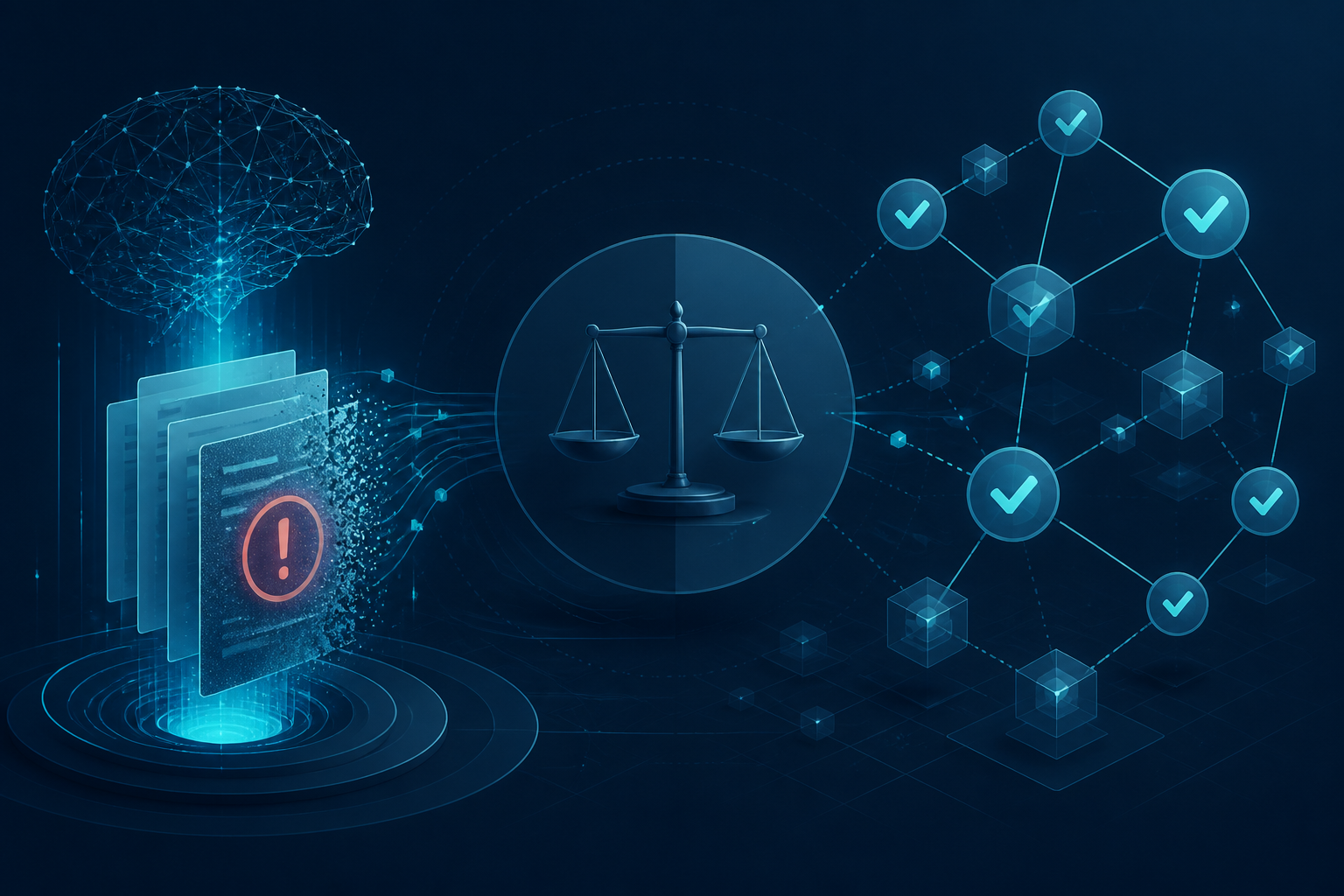
Who is responsible when an AI tool shares false claims?
Explore how legal frameworks, regulatory statutes, and enterprise policies allocate liability across developers, deployers, and source publishers when artificial intelligence generates inaccurate claims, defamatory statements, or misleading citations.
Mark BarclayUpdated

What is the European AI Act?
Readers will discover how the European Union categorizes artificial intelligence systems by risk, the legal transparency and governance obligations placed on developers and deployers, and the operational steps required to maintain compliance across digital information workflows.
Mark BarclayUpdated

How do authorities track where AI finds its facts?
Discover how regulatory authorities audit AI training data, inspect retrieval-augmented generation pipelines, and enforce provenance requirements to trace the origins of factual claims generated by artificial intelligence systems.
Mark BarclayUpdated

What makes content dependable enough for AI to cite?
Discover how artificial intelligence retrieval engines evaluate digital material for factual grounding. This guide examines the structural, legal, and evidential criteria that determine whether an automated system can rely on your documentation for citations.
Mark BarclayUpdated